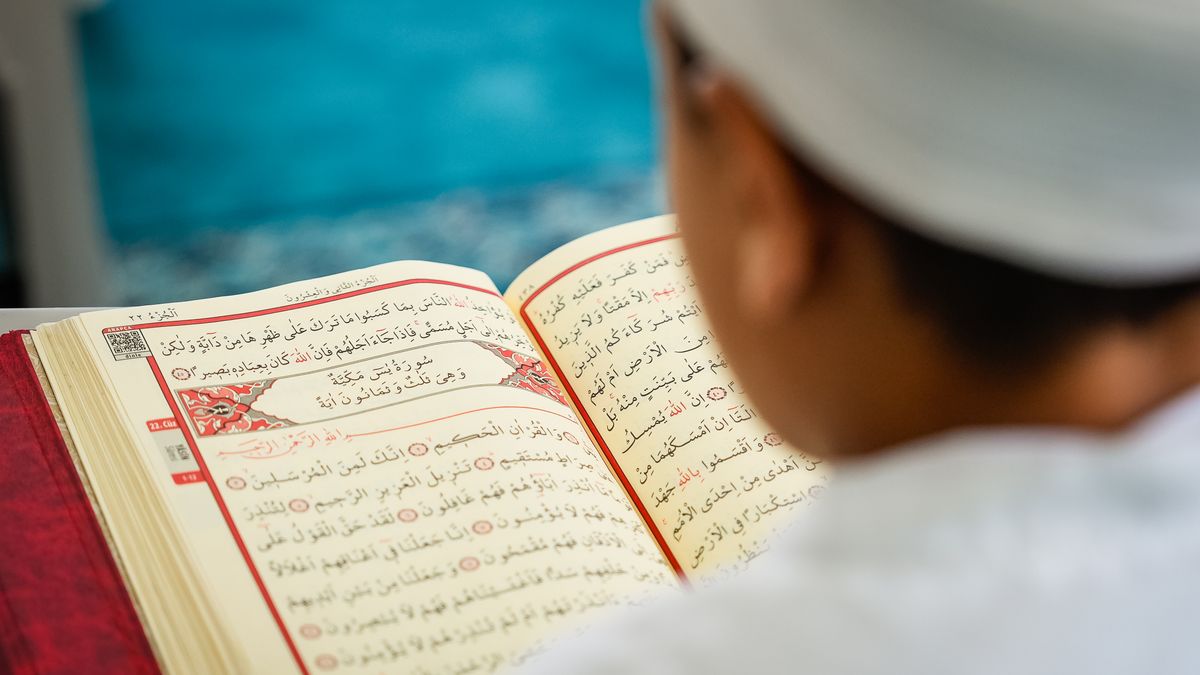
If you have ever listened to a skilled Qari and wondered why their recitation sounds so clear and beautiful, the answer is Tajweed. This guide explains what Tajweed is and introduces the main rules in simple language.
What Does Tajweed Mean?
The Arabic word tajweed comes from a root meaning “to make better” or “to perfect”. In Quran recitation, it means giving every letter its right: pronouncing it from its correct point of articulation and with its correct characteristics.
Why Is Tajweed Important?
Some Arabic letters sound similar to English speakers, but changing one letter can change the meaning of a word. Tajweed protects the meaning of the Quran and preserves the way it has been recited and taught from generation to generation.
Recite the Quran fluently and beautifully with Tajweed rules and a qualified Qari.
Learn more → Free trialThe Main Tajweed Rules for Beginners
1. Makharij al-Huroof (articulation points)
Each letter comes from a specific place: the throat, tongue, lips, nasal passage or the empty space of the mouth. Learning makharij is the first step in correct recitation.
2. Rules of Noon Sakinah and Tanween
| Rule | What happens |
|---|---|
| Izhar | The noon sound is pronounced clearly (before the throat letters) |
| Idgham | The noon merges into the next letter |
| Iqlab | The noon changes to a meem sound before ب |
| Ikhfa | The noon is partially hidden with a nasal sound |
3. Rules of Meem Sakinah
Ikhfa Shafawi (before ب), Idgham Shafawi (before another م) and Izhar Shafawi (before all other letters).
4. Ghunnah
A nasal sound, held for about two counts, found on noon and meem with shaddah and in several of the rules above.
5. Qalqalah
An echoing or bouncing sound on the letters ق ط ب ج د when they carry a sukoon. A common way to remember them is the phrase قُطْبُ جَدٍّ.
6. Madd (elongation)
Stretching certain vowel sounds for a set number of counts. Natural madd is two counts; other types can be longer depending on what follows.
How to Learn Tajweed Effectively
- Learn one rule at a time and practise it in real ayahs.
- Recite to a qualified teacher who can correct you.
- Listen to well-known reciters and imitate them slowly.
- Revise regularly until the rules become natural.

Written by our team of Quran teachers in Lahore, following our editorial policy. Last updated 2026-10-20.
 Safe for Kids
 Male & Female Teachers
 Online Classes From Anywhere
 Qualified Quran Teachers
 Live 1-to-1 Classes
 WhatsApp Support
 Families in 31 Countries
 100% Islamic Curriculum