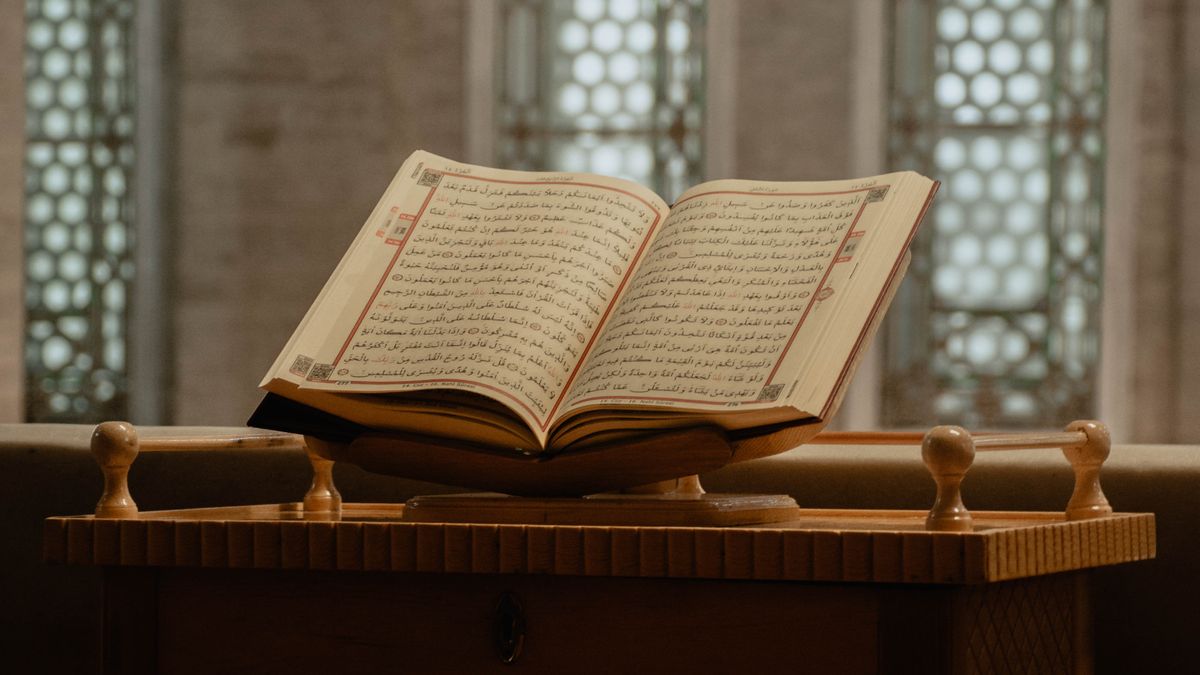
The rules of Noon Sakinah and Tanween are among the first Tajweed rules every student learns. Noon Sakinah is a noon with a sukoon (نْ); Tanween is the double vowel at the end of a word (ـًـٍـٌ), which sounds like an extra noon. What happens to that "n" sound depends on the next letter.
The Four Rules at a Glance
| Rule | Meaning | Letters | What you do |
|---|---|---|---|
| Izhar | Clear | ء ه ع ح غ خ (6 throat letters) | Pronounce the noon clearly, no Ghunnah |
| Idgham | Merging | ي ر م ل و ن (يرملون) | Merge the noon into the next letter |
| Iqlab | Changing | ب | Change the noon into a hidden meem with Ghunnah |
| Ikhfa | Hiding | The remaining 15 letters | Hide the noon with a nasal sound (Ghunnah) |
1. Izhar (Clear Pronunciation)
When Noon Sakinah or Tanween is followed by one of the six throat letters, pronounce the noon clearly. Example: مَنْ آمَنَ.
Recite the Quran fluently and beautifully with Tajweed rules and a qualified Qari.
Learn more → Free trial2. Idgham (Merging)
The letters are gathered in the word يرملون. It has two types:
- With Ghunnah (ي ن م و): مَنْ يَقُولُ
- Without Ghunnah (ل ر): مِنْ رَبِّهِمْ
Note: Idgham only applies across two words. Within one word (e.g. دُنْيَا), the noon is read clearly.
3. Iqlab (Changing)
When followed by ب, the noon sound changes to a meem with Ghunnah, often marked with a small meem in the Mushaf. Example: مِنْ بَعْدِ.
4. Ikhfa (Hiding)
With the remaining 15 letters, the noon is neither fully clear nor merged: it is hidden with a nasal sound held for about two counts. Example: مِنْ قَبْلِ.
Practice Tip
Take one page of Juz Amma and circle every Noon Sakinah and Tanween. Identify the rule for each before reading aloud. Then read it to your teacher.
Next, learn the rules of Meem Sakinah and Ghunnah.

Written by our team of Quran teachers in Lahore, following our editorial policy. Last updated 2026-10-20.
 Safe for Kids
 Male & Female Teachers
 Online Classes From Anywhere
 Qualified Quran Teachers
 Live 1-to-1 Classes
 WhatsApp Support
 Families in 31 Countries
 100% Islamic Curriculum