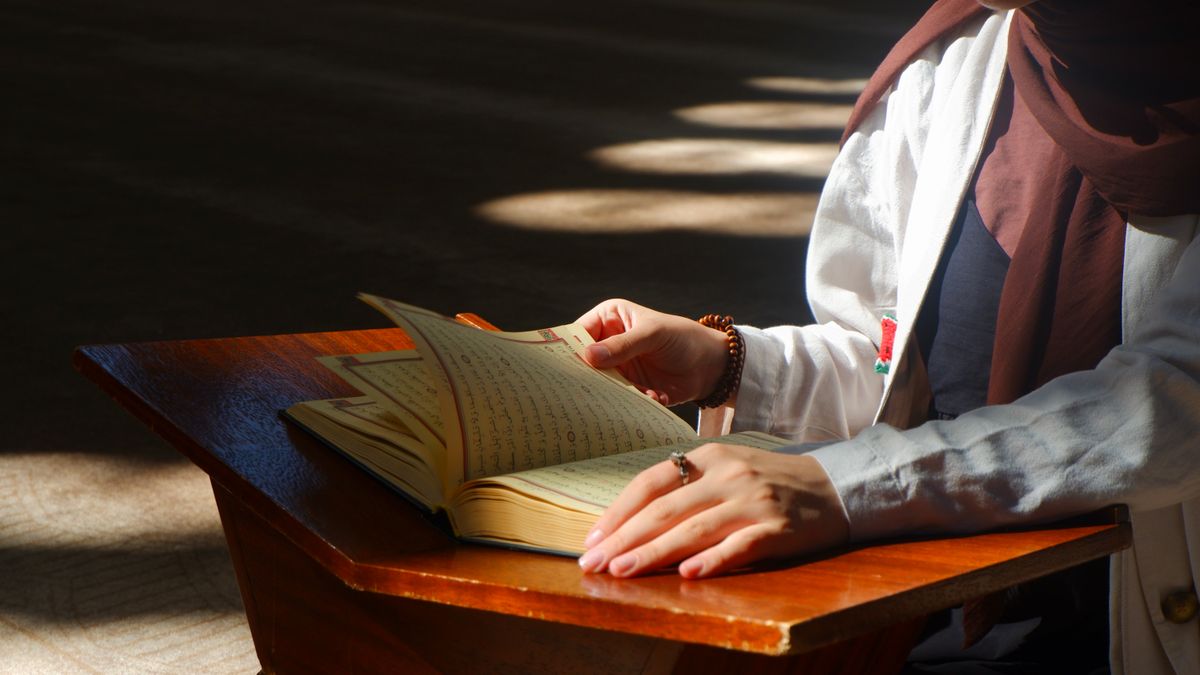
After Noon Sakinah, the next set of rules covers Meem Sakinah, a meem with a sukoon (مْ). Because meem comes from the lips, these rules are called "Shafawi" (labial).
The Three Rules
| Rule | Next letter | How to read | Example |
|---|---|---|---|
| Ikhfa Shafawi | ب | Hide the meem with Ghunnah, lips lightly closed | تَرْمِيهِمْ بِحِجَارَةٍ |
| Idgham Shafawi | م | Merge into the next meem with Ghunnah | لَهُمْ مَا |
| Izhar Shafawi | All other letters | Pronounce the meem clearly | لَهُمْ فِيهَا |
Special Care: Before و and ف
Scholars emphasise extra care in Izhar Shafawi when meem is followed by و or ف, because these letters are close to the meem's articulation point and it's easy to accidentally hide the meem. Keep it clear.
Tajweed
Recite the Quran fluently and beautifully with Tajweed rules and a qualified Qari.
Learn more → Free trialHow Long Is the Ghunnah?
In Ikhfa Shafawi and Idgham Shafawi, the Ghunnah is held for about two counts. See Ghunnah in Tajweed.
Quick Memory Trick
- B → hide (Ikhfa)
- M → merge (Idgham)
- Everything else → clear (Izhar)
Review the rules of Noon Sakinah and Tanween to compare them.

My Online Quran Tutor Teaching Team
Written by our team of Quran teachers in Lahore, following our editorial policy. Last updated 2026-10-20.
Written by our team of Quran teachers in Lahore, following our editorial policy. Last updated 2026-10-20.
 Safe for Kids
 Male & Female Teachers
 Online Classes From Anywhere
 Qualified Quran Teachers
 Live 1-to-1 Classes
 WhatsApp Support
 Families in 31 Countries
 100% Islamic Curriculum