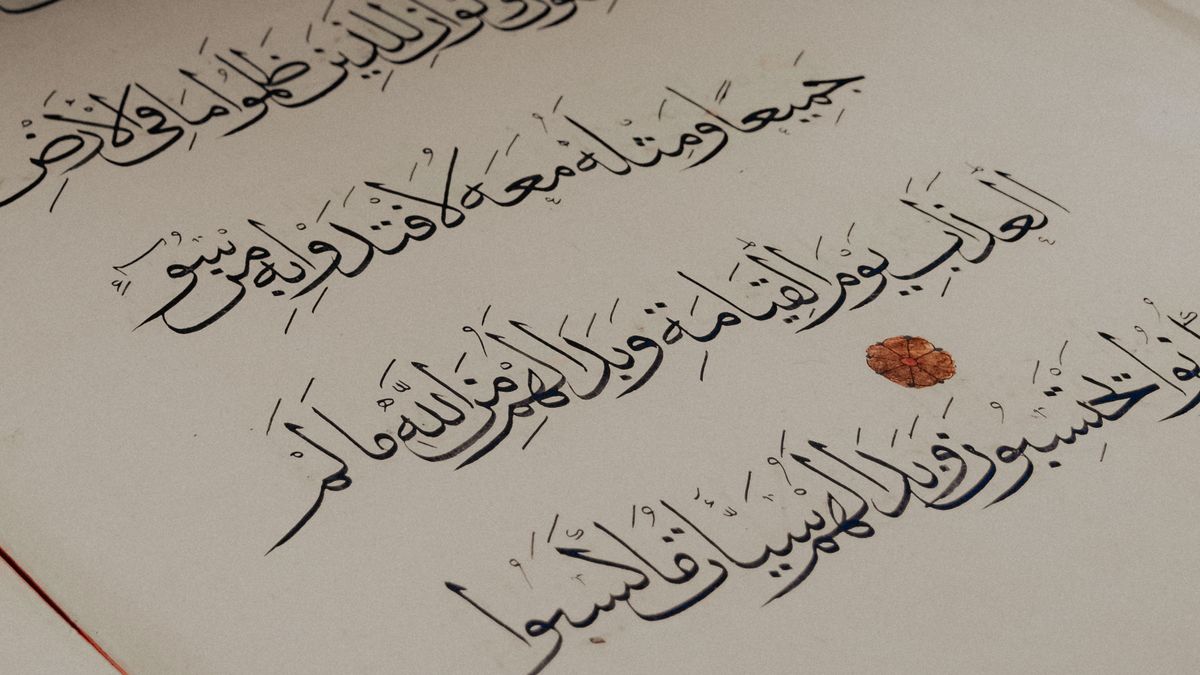
Makharij al-Huroof means "the exit points of the letters". It is the foundation of Tajweed: if a letter comes out of the wrong place, it becomes a different letter, and sometimes changes the meaning of a word.
The Five Main Areas
Scholars of Tajweed, following Imam Ibn al-Jazari, describe 17 specific articulation points grouped into five main areas:
| Area | Arabic name | Letters |
|---|---|---|
| Empty space of mouth and throat | Al-Jawf | The three Madd letters: ا و ي (when elongating) |
| Throat | Al-Halq | ء ه (deep), ع ح (middle), غ خ (top) |
| Tongue | Al-Lisan | 18 letters, including ق ك ج ش ي ض ل ن ر ط د ت ص ز س ظ ذ ث |
| Lips | Ash-Shafatan | ف ب م و |
| Nasal passage | Al-Khayshum | The Ghunnah sound of ن and م |
The Throat Letters
English speakers often struggle with the throat letters. ح is a breathy sound from the middle of the throat, very different from ه. ع comes from the same area but is voiced. خ and غ come from the top of the throat, near the mouth.
Recite the Quran fluently and beautifully with Tajweed rules and a qualified Qari.
Learn more → Free trialThe Tongue Letters
The tongue has the most articulation points. A few examples:
- ق: the very back of the tongue against the soft palate (deeper than ك).
- ض: one or both sides of the tongue against the upper molars, a uniquely Arabic sound.
- ث ذ ظ: the tip of the tongue touching the edges of the upper front teeth.
Common Mistakes
- Pronouncing ث like س (e.g. "salasa" instead of "thalatha")
- Pronouncing ذ and ظ like ز
- Confusing ح with ه, or ع with ء
- Pronouncing ق like ك
How to Practise
A useful technique is to add a sukoon to the letter and put a hamzah with a vowel before it, like "ab", "at", "ath". Where the sound stops is the makhraj. Practise with a teacher who can hear and correct you. These sounds are hard to self-correct.
Continue with our beginner's guide to Tajweed, or learn makharij properly in our online Tajweed course.
Written by our team of Quran teachers in Lahore, following our editorial policy. Last updated 2026-10-20.
 Safe for Kids
 Male & Female Teachers
 Online Classes From Anywhere
 Qualified Quran Teachers
 Live 1-to-1 Classes
 WhatsApp Support
 Families in 31 Countries
 100% Islamic Curriculum