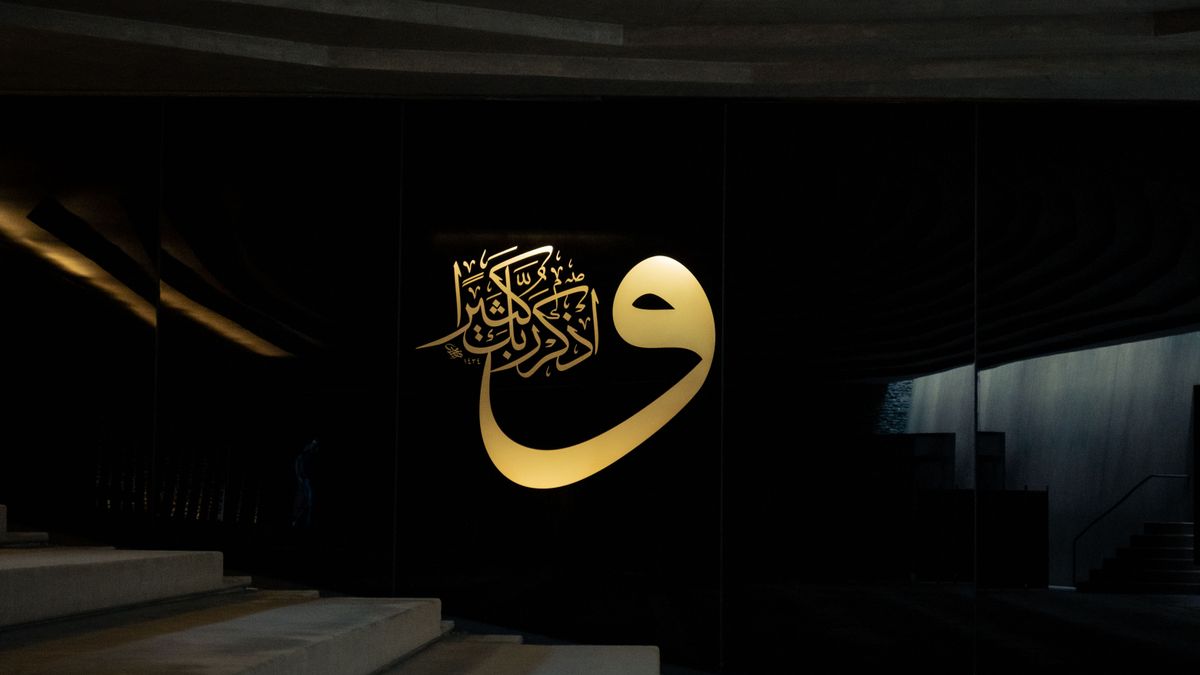
Some Arabic letters are pronounced with a full, heavy sound (Tafkheem) and others with a light, thin sound (Tarqeeq). Getting this right gives recitation its authentic Arabic quality.
The Always-Heavy Letters
Seven letters are always heavy. They are gathered in the phrase خُصَّ ضَغْطٍ قِظْ (khuṣṣa ḍaghṭin qiẓ):
خ ص ض غ ط ق ظ
When pronouncing these, the back of the tongue rises toward the roof of the mouth. They are heaviest with fatha, slightly less with damma, and lightest with kasra.
Letters That Change: Ra (ر)
- Heavy when it has fatha or damma, e.g. رَبِّ
- Light when it has kasra, e.g. رِجَالٌ
- With sukoon, it depends on the letter before it (and sometimes after it).
Recite the Quran fluently and beautifully with Tajweed rules and a qualified Qari.
Learn more → Free trialLam in the Name of Allah
- Heavy after fatha or damma: قَالَ اللَّهُ
- Light after kasra: بِسْمِ اللَّهِ
Alif Follows the Letter Before It
Alif is heavy after a heavy letter (e.g. قَالَ) and light after a light letter (e.g. كَانَ).
Common Mistake
Many English speakers make light letters heavy (especially after ل, ك, and ت), or make heavy letters too light. Practise pairs like س/ص and ت/ط.
Master all of this in our online Tajweed course.

Written by our team of Quran teachers in Lahore, following our editorial policy. Last updated 2026-10-20.
 Safe for Kids
 Male & Female Teachers
 Online Classes From Anywhere
 Qualified Quran Teachers
 Live 1-to-1 Classes
 WhatsApp Support
 Families in 31 Countries
 100% Islamic Curriculum