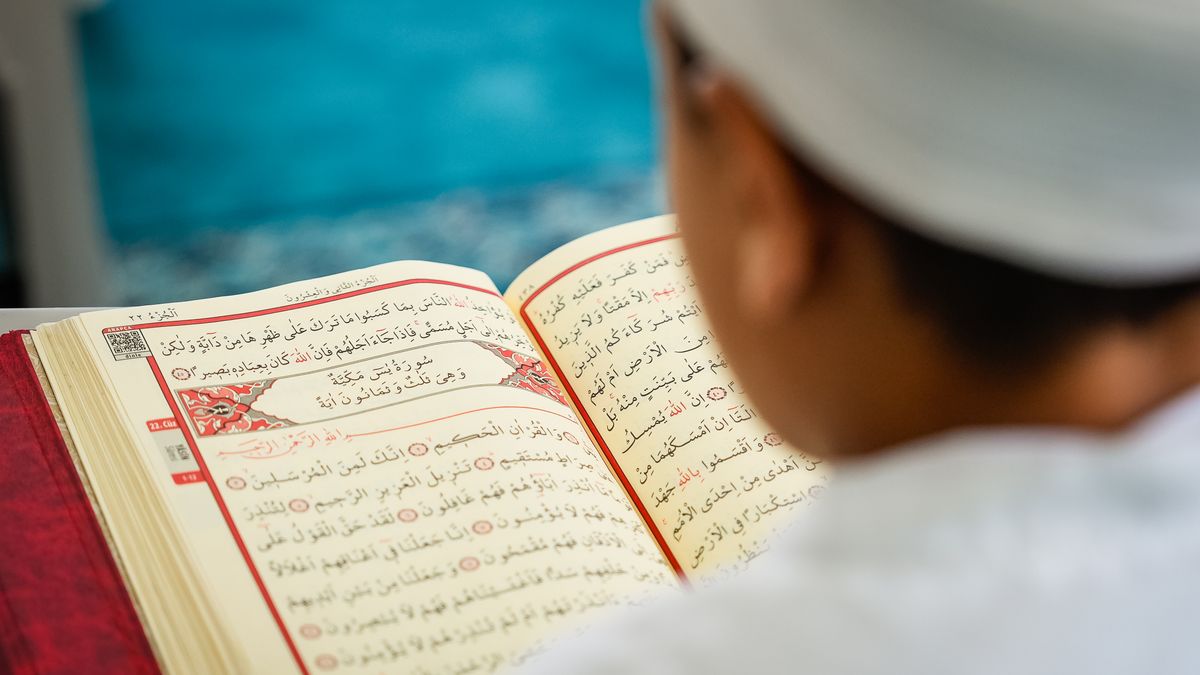
Qalqalah means "shaking" or "echoing". It is a slight bouncing sound produced when certain letters carry a sukoon.
The Five Letters
The Qalqalah letters are ق ط ب ج د, gathered in the phrase قُطْبُ جَدٍّ (qutbu jad).
When Does Qalqalah Apply?
Only when one of these letters has a sukoon, either written (e.g. يَقْطَعُونَ) or because you stop on it at the end of a word (e.g. stopping on الْفَلَقِ → al-falaq).

Tajweed
Recite the Quran fluently and beautifully with Tajweed rules and a qualified Qari.
Learn more → Free trialLevels of Qalqalah
| Level | When | Strength |
|---|---|---|
| Sughra (minor) | Sukoon in the middle of a word | Light |
| Kubra (major) | Stopping on the letter at the end of a word | Stronger |
Some teachers also describe the strongest level when stopping on a Qalqalah letter that has a shaddah (e.g. وَتَبَّ).
Common Mistakes
- Adding a vowel: the echo should not sound like a fatha, kasra or damma.
- Overdoing it: Qalqalah is a light bounce, not a separate syllable.
- Forgetting it on stops: especially at the end of ayahs in Juz Amma.
Practise With Surah Al-Falaq and Al-Ikhlas
Both surahs have Qalqalah at the end of almost every ayah, which is great for practice. Recite them to your teacher and ask for feedback.
Continue with the types of Madd.

My Online Quran Tutor Teaching Team
Written by our team of Quran teachers in Lahore, following our editorial policy. Last updated 2026-10-20.
Written by our team of Quran teachers in Lahore, following our editorial policy. Last updated 2026-10-20.
 Safe for Kids
 Male & Female Teachers
 Online Classes From Anywhere
 Qualified Quran Teachers
 Live 1-to-1 Classes
 WhatsApp Support
 Families in 31 Countries
 100% Islamic Curriculum